
No-code gateway enforcement
Place Access Proxy in front of the app and require MFA before approved traffic reaches protected resources.
Cognito MFA alternative
Amazon Cognito is a strong choice when you are building app authentication around AWS user pools, managed login, and modern customer sign-in flows. Datawiza Access Proxy is built for the apps you already run.
Use Datawiza as a no-code MFA gateway in front of customer portals, partner apps, internal tools, and legacy systems. Add built-in MFA without changing app code, moving users into Cognito, or rebuilding every login flow.
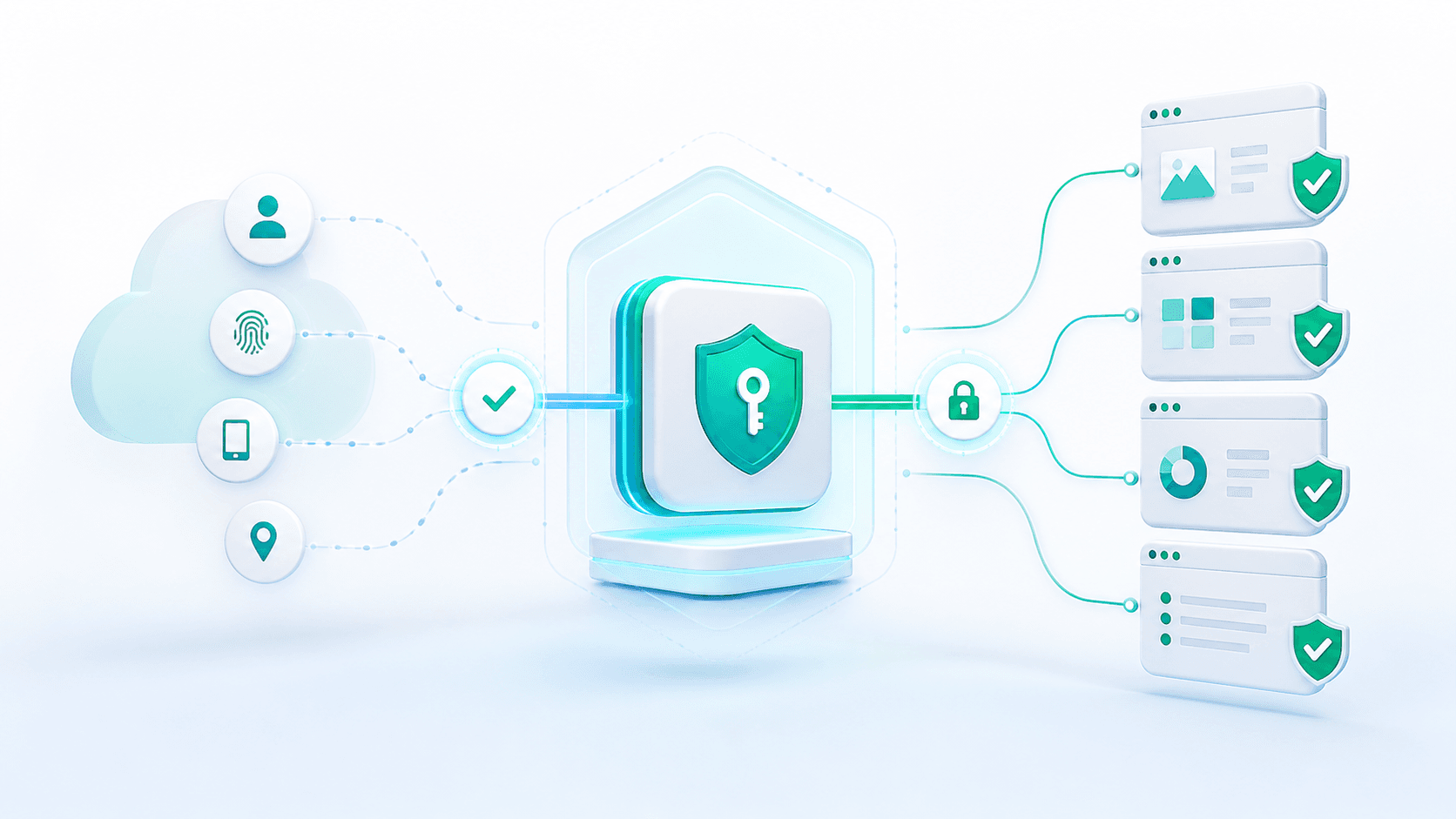









The practical difference
Many teams do not have a Cognito problem. They have important apps that need MFA now, but moving every user and login flow into a user pool would create delay and risk.
If the immediate use case is a customer, partner, or vendor portal, see MFA for customer portals for the access-layer rollout pattern without a CIAM migration.
Place Access Proxy in front of the app and require MFA before approved traffic reaches protected resources.
Use Datawiza built-in MFA when the fastest path is to enforce strong authentication at the access layer.
Preserve the app's current login and user-store patterns while adding a central MFA enforcement point.
Use Datawiza alone for MFA, or integrate with Cognito and other identity providers where that architecture fits.
Comparison
Cognito is a strong fit for apps designed around Cognito user pools. Datawiza is a strong fit when the priority is adding MFA to existing apps without rebuilding their authentication path.
| Criteria | Datawiza Access Proxy | Amazon Cognito MFA |
|---|---|---|
| Primary job | Enforce MFA, SSO, access policy, and audit in front of existing web apps with Datawiza Access Proxy. | Provide user-pool authentication, managed login, app integration, and MFA for users authenticating through Cognito. |
| Application work | Route application traffic through Access Proxy and enforce MFA before requests reach the app. | Applications typically need to be integrated with Cognito user pools, managed login, OAuth/OIDC, SDKs, or API flows. |
| User migration | Can preserve existing app login and user stores while adding MFA at the access layer. | Best when users and sign-in flows can be managed through Cognito user pools or a planned identity migration. |
| Federated users | Can enforce MFA at the proxy layer before app access, regardless of whether the app itself is ready for a new identity model. | Cognito documentation notes that Cognito delegates authentication for federated users to the IdP. |
| Legacy compatibility | Designed for apps that were not built for modern SSO, MFA, SAML, or OIDC. | Best when the app can participate in Cognito-supported authentication patterns. |
| Best-fit project | Fast MFA for existing apps without source-code changes or a user migration first. | AWS-native identity for applications that can be built or refactored around Cognito. |
Related MFA use cases
Explore practical MFA patterns for customer portals, internal systems, legacy applications, ERP platforms, and other existing web apps.
Start with the main overview for built-in MFA, proxy enforcement, app coverage, and rollout strategy.
Get the definition of no-code MFA, including built-in MFA, identity provider mode, and where access-layer enforcement fits.
Protect PeopleSoft HCM, payroll, employee self-service, retiree portals, and other web-based HR systems without changing app code.
Add MFA to legacy applications without changing source code, migrating users, or waiting for an application rewrite.
Add MFA or 2FA to public-facing, external-facing, internet-facing, internal, and custom web applications without changing app code.
Add MFA to IIS applications without touching code, using Datawiza built-in MFA or Entra ID, Okta, Ping, or Duo as the identity provider.
Protect admin portals, admin dashboards, back-office apps, and privileged web consoles with MFA before app access.
Protect customer portals, partner apps, vendor portals, and customer-facing applications without forcing a CIAM migration.
How it works
Datawiza Access Proxy sits between users and protected apps. It verifies the user, enforces MFA, applies policy, then forwards approved requests to the application.
Put Datawiza Access Proxy in front of the customer portal, partner app, internal tool, or legacy system.
Use Datawiza built-in MFA, or connect Cognito when Cognito is already part of your identity architecture.
Apply MFA by app, path, audience, group, policy, and rollout stage before traffic reaches the protected app.
Expand from one high-risk app to other existing apps without separate MFA coding projects for every team.
Use cases
FAQ
No. Datawiza Access Proxy is not a full replacement for Amazon Cognito user pools or AWS-native identity architecture. It is a Cognito MFA alternative for teams that need MFA in front of existing apps without a migration or rewrite.
Yes. Datawiza Access Proxy provides built-in MFA, so teams can enforce MFA without Cognito when the fastest path is gateway-based protection.
Yes. Datawiza can integrate with Cognito when Cognito is already part of the environment, while still helping protect apps that are not ready for direct Cognito integration.
For apps built around Cognito user pools, that can be the right path. For existing apps that would need a login rewrite or user migration, a proxy-based MFA gateway can be faster and less disruptive.
Datawiza is commonly used for customer portals, partner portals, internal tools, legacy ERP and CRM apps, and custom web applications that do not natively support modern MFA.
Next step
Bring one customer portal, B2B app, internal tool, or legacy web application. Datawiza can show where Access Proxy sits, how MFA is enforced, and what changes are avoided.
Amazon Cognito is a service of Amazon Web Services, Inc. This page is an independent comparison and is not affiliated with or endorsed by Amazon Web Services.