Agent credentials are too broad
Agents often inherit broad credentials that were never designed for fine-grained tool, action, or resource-level decisions.
AI agent governance
Control AI agent access to MCP servers, APIs, SaaS apps, internal tools, and enterprise data with identity-aware policy, least privilege, credential protection, approvals, and audit.










Access risk
AI agents are becoming a new access path into company systems. They can read data, call APIs, update tickets, trigger workflows, and invoke MCP tools. Without a central control point, teams end up relying on scattered tokens, broad connector permissions, and inconsistent logs.
Agents often inherit broad credentials that were never designed for fine-grained tool, action, or resource-level decisions.
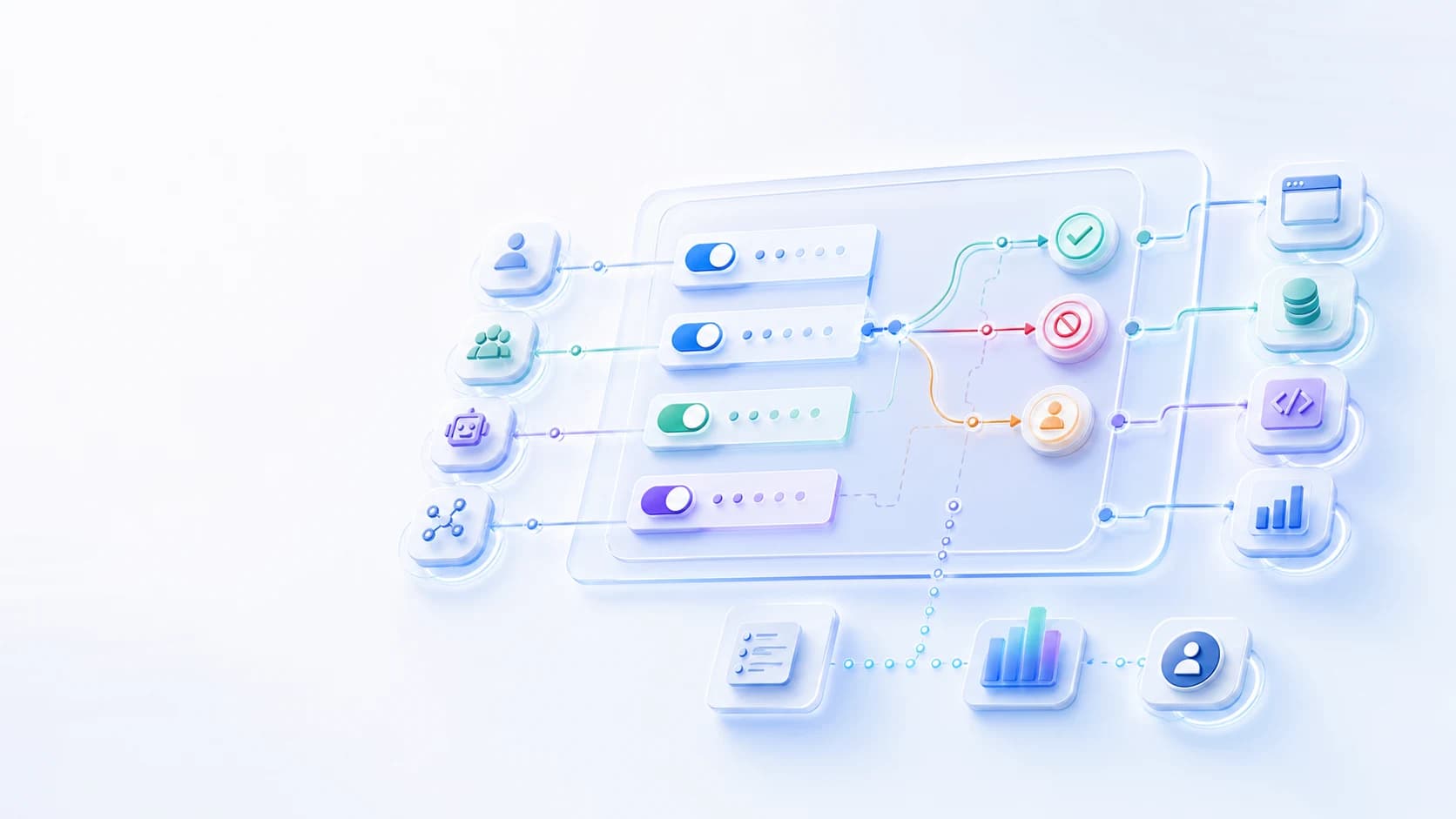
The right policy depends on who initiated the request, which agent is acting, which tool is targeted, and what action is being attempted.
Security teams need one record of what the agent tried to do, which policy matched, whether access was allowed, and what happened next.
Datawiza Agent Gateway
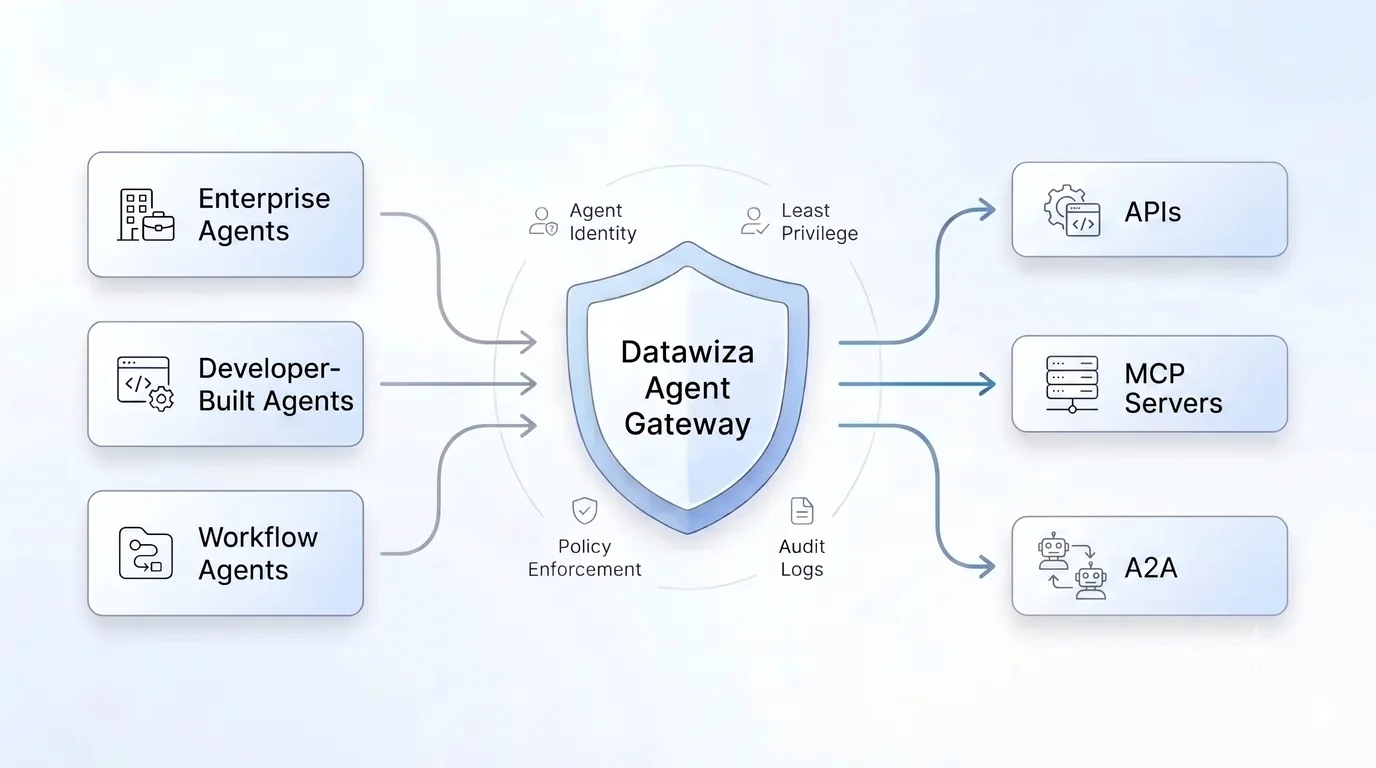
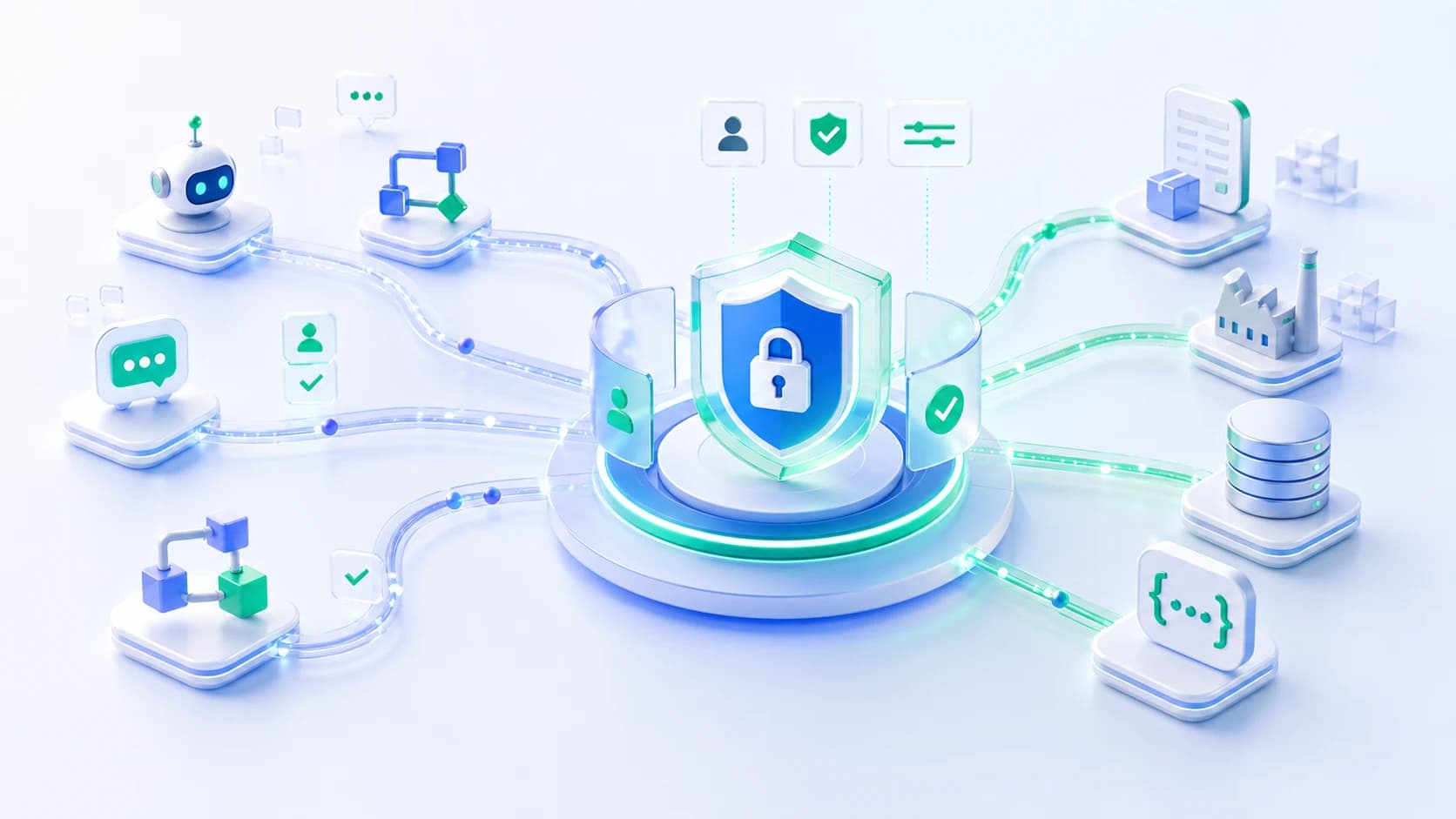
Datawiza Agent Gateway is an AI agent access control solution that sits between agents and enterprise tools. It validates identity, evaluates least-privilege policy, brokers credentials, and logs each decision before approved requests reach downstream systems.
Decide access based on user, group, department, tenant, app role, delegated identity, or service identity from your enterprise IdP.
Give different agents, copilots, desktop clients, service workflows, or internal automation different permissions.
Control access to MCP servers, REST APIs, SaaS connectors, internal services, databases, workflows, and legacy enterprise tools.
Allow or deny read, search, write, export, update, delete, admin, or workflow-triggering actions based on risk and business context.
Require human review or stronger checks before sensitive exports, destructive writes, privileged operations, or production changes.
Record the identity, agent, tool, action, credential event, policy decision, and outcome for every request.
Scope
The broader AI agent access control problem is not limited to MCP. MCP is one important protocol, but agents also reach APIs, SaaS apps, internal tools, databases, and business workflows.
Apply server, tool, action, and environment policy for agents using Model Context Protocol.
Control which agents can call REST APIs, internal HTTP services, partner endpoints, and custom backend systems.
Govern agent actions in systems such as Salesforce, ServiceNow, Jira, GitHub, Microsoft 365, and data platforms.
Protect systems that use headers, legacy credentials, service accounts, or custom access patterns.
Architecture
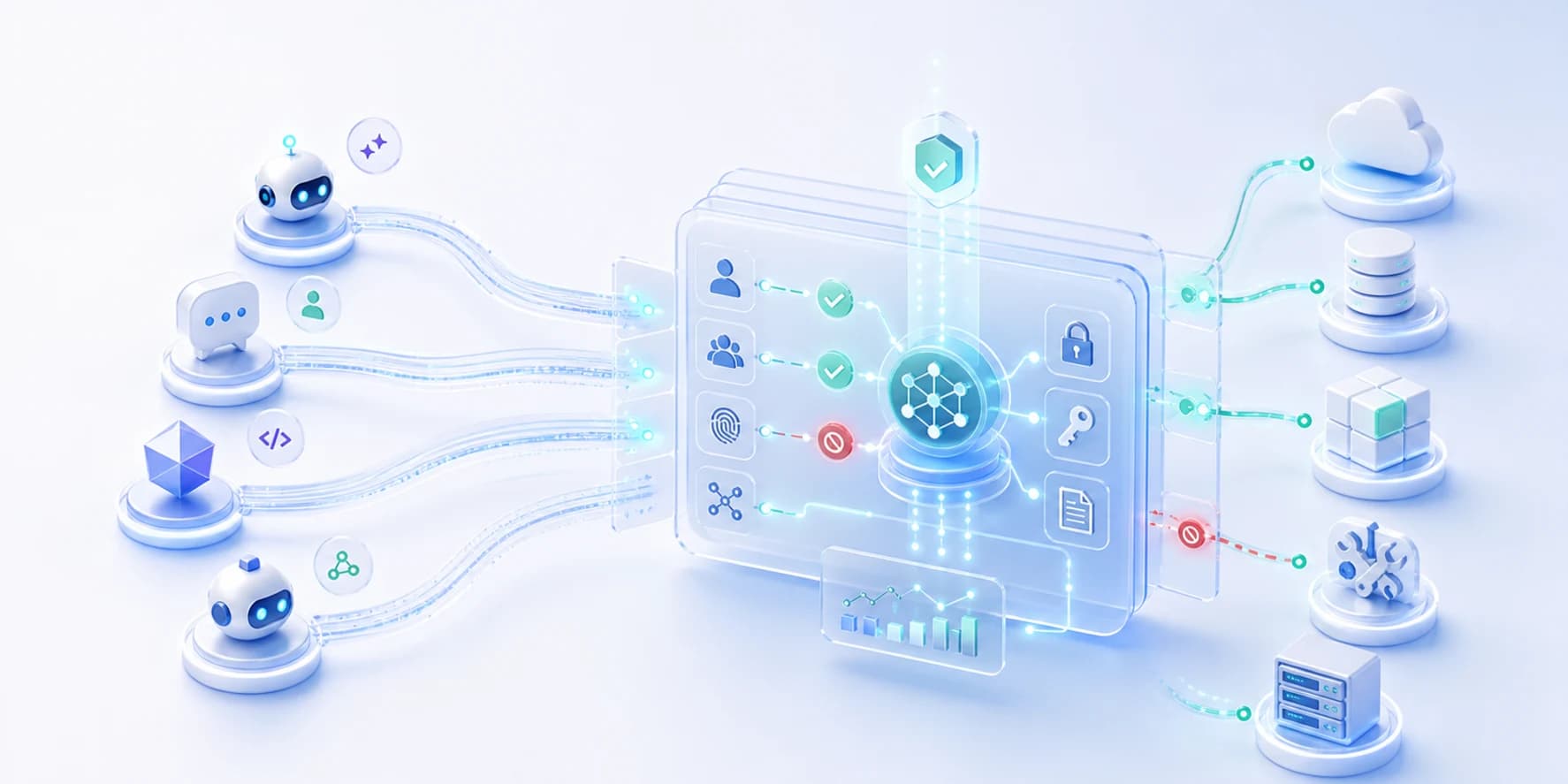
Agents authenticate with your enterprise IdP or trusted identity source, then send tool requests through Datawiza. The gateway validates identity, checks policy, brokers credentials when needed, and forwards only approved requests.
Step 1
Authenticates with Entra ID, Okta, or another IdP and receives a signed access token.
Step 2
Validates issuer, audience, signature, expiry, scopes, and claims, then checks MCP server, tool, and action policy.
Step 3
Receive only approved MCP requests. Denied, approved, and approval-routed decisions are logged.
Identity providers
Deployment options
Token validation: trust the IdP token only after Datawiza verifies it.
Tool policy: allow or deny by agent, claim, MCP server, tool, action, and environment.
Audit: record who or what called the tool, which policy matched, and the outcome.
Policy model
A practical agent access policy should say who is acting, which agent is acting, what target is being accessed, what action is requested, when stronger review is needed, and what evidence must be logged.
The user, group, service account, delegated identity, agent, client, or workflow behind the request.
The MCP server, API, SaaS app, data set, ticket queue, repository, workflow, or internal service being accessed.
The tool call, endpoint, method, operation, export, write, delete, admin task, or workflow trigger.
The environment, session, risk level, network, tenant, data sensitivity, and approval state.
Workflow
The core pattern is simple: put a gateway between AI agents and the systems they can act on.
Use cases
Control which agents can call which MCP servers, tools, and actions before requests reach sensitive systems.
Expose internal APIs and services to agents without handing out broad API keys or service credentials.
Govern how agents interact with SaaS apps such as ServiceNow, Jira, Salesforce, GitHub, and Microsoft 365.
Route high-risk write, export, delete, or production-change actions for review before execution.
Create a consistent record of agent actions across tools for security operations, compliance, and incident response.
Limit which agents can read, search, export, or modify sensitive data sets, records, repositories, and business objects.
Comparison
Direct MCP connectivity
Agents connect directly to tools with broad tokens or local credentials
With Datawiza Agent Gateway
Direct MCP connectivity
Access is often granted at the connector, API key, or server level
With Datawiza Agent Gateway
Direct MCP connectivity
Each MCP server, API, or SaaS connector handles controls differently
With Datawiza Agent Gateway
Direct MCP connectivity
Logs are scattered across clients, servers, and downstream systems
With Datawiza Agent Gateway
Identity and policy
AI agent access control should use enterprise identity, but it should not stop at authentication. Datawiza turns validated identity and context into enforceable policy before an agent reaches a tool.
Validate tokens and claims from Entra ID, Okta, Ping Identity, Google Identity, AWS, or another enterprise IdP before allowing agent requests.
Use groups, scopes, app roles, tenants, agent identity, delegated user context, and environment signals in policy decisions.
Broker OAuth tokens, API keys, service credentials, or legacy credentials at runtime so agents do not store secrets directly.
Export decision logs for SIEM, compliance, operations, and incident review with identity-rich evidence for every agent action.
Why Datawiza
Use your existing IdP, group model, and access governance process instead of creating a separate agent-only identity silo.
Apply one enforcement model across MCP, APIs, SaaS apps, internal services, and legacy tools.
Keep OAuth tokens, API keys, and legacy credentials away from agents while still letting approved work happen.
Next step
Bring one agent workflow, the tools it can reach, and the groups that need access. We can map where identity, least privilege, credential protection, approvals, and audit should be enforced.
Setup guides
Protect remote MCP servers with Datawiza Agent Gateway and Microsoft Entra ID before cloud-based assistants or MCP clients can list or call tools.
FAQ
AI agent access control is the policy layer that decides which users, groups, agents, tools, actions, and resources an AI agent can access before a request reaches enterprise systems.
Route the agent through an enforcement layer such as Datawiza Agent Gateway, validate the user or agent identity, then apply least-privilege policies for each tool, action, resource, and environment before the request reaches the target system.
Use resource-level policy instead of broad connector access. Datawiza can evaluate the user, group, agent, target data source, requested action, and context before allowing reads, exports, updates, or workflow actions.
MCP access control is one part of AI agent access control. A broader agent access program also covers REST APIs, SaaS apps, internal services, databases, workflows, and legacy enterprise tools.
No. Datawiza is designed to work with your existing identity provider, such as Entra ID, Okta, Ping, Google Identity, AWS, or another OAuth/OIDC provider.
Datawiza can broker or inject the right downstream credential at runtime, so agents do not need to store OAuth tokens, API keys, service credentials, or legacy credentials directly.
Yes. Datawiza can log the user, group, agent, client, target system, requested action, policy decision, credential event, and outcome for security operations and compliance workflows.
Continue into the MCP, ERP, credential, and product pages that support this AI agent access-control cluster.
Sign up to secure your AI agents and critical enterprise apps